Thursday, April 5, 2012

Melaka - A Road Trip


We took a 2 hour bus ride north to spend 3 nights in Melaka (or Malacca).  We booked into the Jonker Boutique Hotel right in the heart of Chinatown.  We had a nice room with A/C and private bathtub for soaking that overlooked the famous performing stage on Jonker Walk.


In the heart of Melaka is a long narrow five hundred meter street flanked by old houses dating back to 17th century. It was merely a row of shacks when it started on the Western bank of Melaka River. The servants and subordinates of Dutch masters used to live at nearby Heeren Street. However, as soon as Dutch left, it became noblemen's street! Rich Babas and Bibiks started to live and trade here giving the street a deep-rooted ethnic and cultural flavor. Now officially named as Jalan Hang Jebat, it is popularly known as the Jonker Walk. Due to availability of collectible items dating back to medieval times at many shops, it is also referred as the Antique Street. Due to Chinese influences, its also referred as the China Town of Melaka. 


During Dutch Period, it was known as rich men's street as rich Baba Nyonya had by that time established their businesses here!


Whatever the name, it really appears to be a living museum and is a must-see place for anyone visiting Melaka. Every Friday, Saturday and Sunday evenings, the street is closed for motor vehicles from 6 pm to midnight and roadside stalls are installed by street vendors selling gift items and souvenirs for the visitors of Melaka.  We arrived on Sunday morning, so we could enjoy one noisy night from the revelry outside our window and then have two quiet nights.


Strolling along the Jonker Walk gives impression of Carnival-like atmosphere. There are many shops selling collectable items or 'antiques' as old as few hundred years. However, most of these 'antique' shops are either closing or are already closed in the evening time. The artifacts from the Portuguese, Dutch and British colonial periods can be found in many shops.


One can also bargain for invaluable antique furniture from China, centuries-old Javanese and Sumatran wood carvings, intricately carved Chinese rosewood furniture inlaid with mother-of-pearl, Indian brassware and tapestry items, porcelain items dating back to the Sung, the Ming and the Ching Dynasties, Dutch hanging kerosene lamps and other curios. Enthusiasts of numismatics can find interesting coins and banknotes as well. Visitors with eagle-eyed looks can even find items made of banned ivory and statues of Buddha! Many reflect the influence Chinese immigrants who sailed to Melaka with Muslim Chinese Admiral Cheng Ho in the 15th century, Straits Chinese and later Chinese immigrants to the then Malaya. 


We found a few shops still making the famous beaded shoes.  Nyonya Melaka beaded shoes, also known as ‘kasot manek’, literally meaning shoe beads, is a type of shoe that dates back to the early 20th century. It refers to beaded shoes worn by a nyonya to complete her Sarong Kebaya outfit, together with chained brooches (kerosang rangkai) and a silver belt (pending). The shoes are made of Nyonya cut beads (manek potong), which are treasured as these beads are no longer available.

Vintage kasot manek are intricate and finely stitched, a testimony to the fine workmanship of yesteryears. The intricacy and fine workmanship of a pair of beaded slipper is also a hallmark of highly accomplished Peranakan women, also known as nyonyas, whose skills in embroidery and beadwork are highly valued.

The beaded slippers were worn by both the Peranakan males (baba) and females (nyonya) and were popular in the 1930s. Nowadays, the beaded slippers are more commonly worn by women only. The beaded slippers were made for two types of occasions. For happy occasions, like the Chinese New Year or birthdays, these beaded slippers used colorful beads with intricate patterns. For sad occasions, the beads used were likely to be in black, white or blue colors (Chinese mourning colors), and the patterns were simple. The beaded slippers were either opened face (peep-toe) or covered face. The popular motifs used for the patterns were flowers, birds, butterflies, and fruits. These motifs, likely to appeal to the feminity of the Peranakan women, had both European and Chinese influence. The sample patterns were likely to be cross-stitched, with each stitch representing a bead. The beads were then used in the actual beading of the slippers. The Peranakan pattern for the beaded slipper is unique in that even the background is quite ornate resulting in a colorful patterned mosaic with a well-defined border. To sew the pattern, a laced-up wooden frame (pidangan) is used to provide the right tension for the beading. The beading process starts from the center of the pattern, moving to the right then left. The main motif of the pattern is first beaded, followed by the background and then the border. The border may have a smooth or scallop-edge. When the beaded pattern is completed, it would be sent to the cobbler to be made into slippers. Leather is usually the preferred material for the beaded slippers, and may be either made with low or high heels.  At over $130 US per shoe, we decided to leave with only the memory and a few photos.


Wonderful variety of local and ethnic traditional cuisine, beverages, desserts and Baba Nyonya delicacies can be found in the shops and cafes of the Jonker Street.


We tried the Chicken Rice Ball, a Melakan specialty made by boiling rice in chicken stock, some chicken oil and salt and flavored with garlic, ginger and shallot. The rice thus cooked is shaped into balls and served with boiled chicken pieces, garnished with cucumber, spring onion, and chili sauce.


Spring roll, called 'Popiah' can be found here and there in the Jonker Street. Mostly both wet and deep fried varieties are available. Traditionally the contents include scrambled egg, fried onion, lettuce, turnip, bean sprout. The contents of popiah at Jonker Street may include fried pork fat as well. Chili paste and sweet sauce is provided with popiah.  We also sampled spiral cut potatoes deep fried as we walked up the road.


Chendol or cendol is one of the popular desserts in Melaka and it was so strange, of course we tried it. It consists of a big pile of shaved ice and white coconut milk, Gula Melaka (palm sugar) and sweet fruit juices like mango are poured over it and sometimes corn is added.  After you eat the sweetly flavored ice, you find surprise items underneath.   I found thin worm-like, pandan-flavoured, green-colored pea flour noodles and red beans, pieces of glutinous rice, grass jelly and even a few peanuts... really interesting.  Kim and Emily only tasted mine once, but I ordered it several times here in Malaysia and find it surprisingly refreshing!


We enjoyed the food, toured several Chinese temples and took a ride on the 3 wheeled bicycle powered carts.  It was pleasant to be away from the boat and the job list for a few days.

Tom

Sunday, March 25, 2012

Malaysia


Malaysia is a bubbling, bustling melting pot of races and religions where Malays, Indians, Chinese and many other ethnic groups live together in peace and harmony. The mixture of cultures is reflected in the shops, restaurants, shrines, temples, mosques and churches that we visited.
Geographically, Malaysia is as diverse as its culture.  Malaysia is divided into 13 states and 3 Federal Territories, separated by the South China Sea with 11 states and 2 federal territories (Kuala Lumpur and Putrajaya) in Peninsular Malaysia and two states and 1 federal territory (Labuan) in East Malaysia.

Malaysia from afar conjures up images of a hot and steamy city (Kuala Lumpur) and dank small towns typical of third world countries half a century ago.  Surprised again!  While it was a bit hot and steamy everywhere, there were air conditioned malls and offices and lovely shade trees to cut the mid-day sun.  As for Third World poor, I was wrong.  We experienced fancy long-distance bus rides, excellent roads, good internet connections, great restaurants, safe public drinking water and modern malls.  Mostly, though Malaysia impressed me with its people.  They were friendly, smiling, courteous and helpful.  We dressed conservatively to not give offense with our Western garb, and I never felt unwelcomed by the people.


We had an uneventful 3 hour trip from Singapore to a relatively new marina called Puteri harbor.  We found modern docks, great steady electricity and water.  We stayed there for just over a month and had the air conditioners humming continually.  Although electricity and water were metered, out total bill for 33 days was about $600 US which works out to about $18 per day.  We ate out several meals which are inexpensive here too.  Our biggest complaint is that the marina was very isolated.  The marina van took us shopping twice per week and would shuttle us for free to the local town and to nearby resorts to use their pool, but it would have been nice to walk to places without having to make arrangements.  A quick read of the labels on these food items in the supermarket (photo below) tell you that we are not in Kansas anymore!

 
Tom kept busy by replacing our watermaker membrane, doing some major work on the toilet system and got the dingy motor back in good shape.  Kim did her perpetual varnish work on the exterior teak and washing and waxing the topsides.  We tried to get some local help, but no willing locals could be found.

One day we took the efficient bus system to Johor Bahru where we met Cam and Nicki from Dreamer and did some clothes shopping.  Kim and Emily were fascinated with the colorful Indian clothes that were full of beads and baubles and both now have full outfits.  Even Tom now has a fancy turban.  The streets were lined with vendors cooking and selling spicy food, colorful flowers and Indian temples.   


We had lunch in a Chinese restaurant that had whole cooked ducks hanging in the front window.  It was delicious and very inexpensive.


We did manage to escape to Malacca for 3 nights and that was wonderful.  We splurged on a hotel right on Jonker Walk which had a King bed, deep tub, big screen TV and frosty air conditioning.  I will do a separate blog on Malacca.

Tomorrow morning we start a 5-day, 450 mile trip up the busy Malacca Straights to Langkowi.  We will provision there for our crossing of the Indian Ocean.

Tom

Sunday, March 11, 2012

Singapore

Located at the southern tip of the Malay Peninsula, Singapore has long been a shipping/trading center. Even in the 11th to 14th centuries it was considered part of both Malay and Javanese kingdoms, but it fell from importance and the settlement was destroyed in the 13th century when the town of Malacca (Melaka) on the Malay Peninsula supplanted it as a trading center.  For hundreds of years the area was occupied only by fishermen in small settlements.

In 1819 Stamford Raffles, the British lieutenant-governor of Java, received permission from the British government to build a city on Singapore island, knowing that all ships sailing between the Far East and Europe had to pass this point.  By playing clever politics with an older sultan against his son, Raffles soon had a treaty that allowed British rule alongside the sultan.  Singapore became a magnet for workers from SE Asia and China in particular, and a major trading center.  A fort was built on the coast of Singapore, trade flourished and the East India Company raked in profits from all the ships that passed through.  Raffles built the city to a grand plan with botanical gardens, covered walkways, shopping districts, and the population divided “neatly” into ethnic districts.  Much of his original city plan is still in evidence today.


The British maintained an extensive military presence in the area during the 1800's and early 1900's.  During WW II the British were forced to surrender to the Japanese who had marched down the Malay Peninsula into Singapore in huge numbers.  The city lived under harsh Japanese rule from early 1942 to late 1945 and was returned to the British at the end of the war.  By 1959 Singapore became an independent member of the British commonwealth.  Lee Kuan Yew ruled as Prime Minister from 1959 to 1990, seeing the small nation through a disastrous two-year joining with Malaysia when there were major ethnic struggles (1963 to 1965) after which it became an independent state.  Lee Kuan Yew ruled with heavy-handed social and political policies, but overall the small country has enjoyed a booming economy, now based on services and technology more than maritime trade.

We motored over the 3 hours from Indonesia and stepped into a bustling modern world.  My AIS system was overloaded with ship targets and we weaved our way through 300 meter long ships moving at 13 knots.  The procedure entering into Singapore is unique (for us).  We motored into the western quarantine area, drifted and hailed the officials.  We passed our passports, crew lists and port clearance from Indonesia across the gap between the two drifting boats into a fish net on a pole.  Within 15 minutes the net came back with all the appropriate stamps in the passports and we were free to enter Singapore.  No charge for this service.  Many countries could learn from this procedure.

 
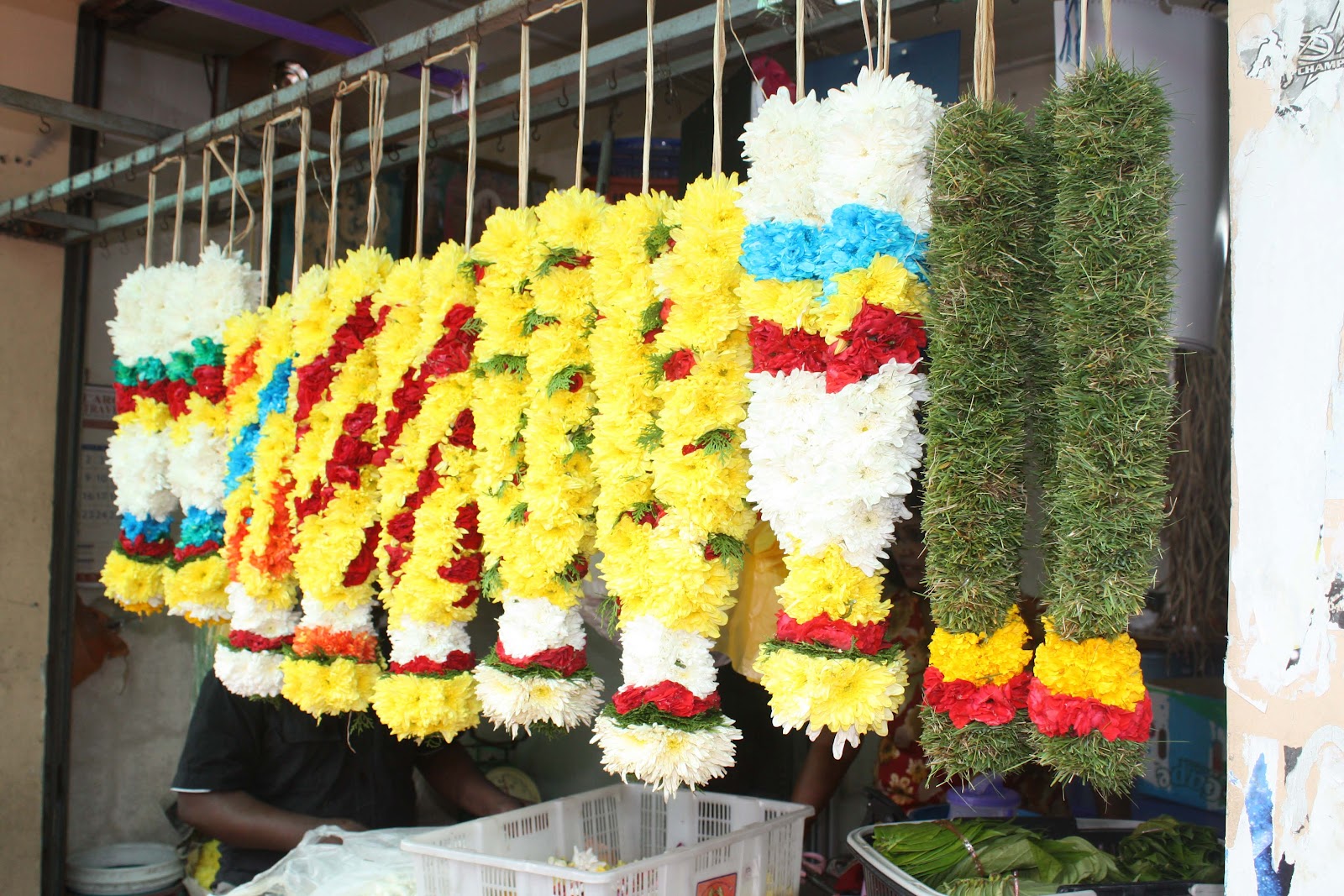
We splurged and stayed one week at the Marina at Keppel Bay.  We were met by 4 line handlers and electric and water lines were connected for us.  They even had fluffy white towels for us when we went up for showers.  It was a 15 minute walk to Vivo City, the largest mall in Singapore…5 floors of western decadence. The malls were air conditioned, but it was more fun to hop on the Mass Rapid Transit (MRT, also air conditioned) and zoom off to Little India and Chinatown.  Man were they ever hustle-bustle.  Lots of people, lots of motorbikes, extremely colorful shops with flowers and wonderful cloth, local market stalls with fruits and veggies, spice shops I could hardly walk into without sneezing.  Then back to the MRT and zip! - off to some other new wonder.


We got Emily a new passport and eyeglasses and had a few moles removed.  We toured the Asian Civilizations Museum, getting an overview of the peoples, cultures and religions of this area. 


We saw the Singapore Zoo, Night Safari and the Jurong Bird park.   


Animals at the zoo are kept in spacious, landscaped enclosures separated from the visitors by either dry or wet moats. The moats are concealed with vegetation or dropped below the line of vision. Dangerous animals that can climb well are housed in landscaped glass-fronted enclosures.  Emily got to ride an elephant and hold hands with a lemur.


We also rode the Singapore flyer.  The Singapore Flyer is a giant Ferris wheel located in Singapore, constructed in 2005–2008.  Described by its operators as an observation wheel, it reaches 42 stories high, with a total height of 541 ft., making it the tallest Ferris wheel in the world.  One week of non-stop shopping and sightseeing before heading off to Malaysia and cheaper dockage.

Tom

Tuesday, February 21, 2012

Cruising in Company…..North to Singapore

We met Nikki and Cameron on Dreamer in Borneo(Kalamantan) and it was really nice to cruise for a while with another cruising boat.  They come from Australia and they have a 10 meter catamaran.  It was nice to have someone else pick anchorages and we cruised together all the way from Borneo to Singapore.  


When we left Kumai, we decided to make the trip around to the southwest corner of Borneo in one overnight trip, whereas Dreamer made the same anchorage in 3 day trips.  It was there that we caught up to them and did the overnight crossing together to Belitung Island.  We both had a calm crossing and it was nice to have another boat within VHF radio distance all night.  We cruise at similar speeds and some trips we would beat them and other days all we would see was their wake.

We made our way in day trips around to Tanjung Pandan where Cam jerry-jugged some fuel and I enjoyed a cold beer and visited with the locals.  One woman closed her shop for me and drove me (on the back of her motorcycle) to a market. I was constantly amazed by how much they can load on to these motorbikes.  The photo below was just bread, but the driver was completely enclosed.  I bought vegetables for both boats while Cam did his fuel.  Our last fuel run was way back in Lombok (before Bali) where the locals delivered it to the boat.  It is nice having such big tanks and being able to get fuel where it is cheap and easy!


In many of the anchorages we were surrounded by stilt houses built in 30 feet deep water.  Many were equipped with nets that they would lower into the water and the dropping tide would catch the fish; very ingenious.  Others would be simply for fishing with a small house in which to sleep.


All the villages we visited were friendly and we were soon followed by swarms of children looking to see the strange white folks or to practice some English.  Emily always kept them entertained by making Origami flapping birds or dragons. 


In one village, Nikki bought a handful of candy for about $3 from the local store and passed it out to the children creating smiles all over the village.


In some of the villages they were making sturdy wooden boats and in another they had hundreds of fish traps being made.  Every villager was proud and willing to show us his craftsmanship.


We shared wine and nibbles on each other’s boat every evening and it was nice to discuss plans and boat things.  On Australia Day, we were presented with a signed Aussie flag and they introduced us to Vegemite as we were served breakfast.  Vegemite is a yeast product that resembles something you might scrape from the bottom of your shoe, but spread thinly with butter on toast, it was surprisingly good!  We found our last bottle of champagne from America deep in the bilge and shared it with them as we crossed the equator for the second time.


We cruised through the Bangka and Lingga islands and both arrived at Danga Point Marina in Northeast Batam Island.  We stayed there for a week at the dock with air conditioners humming constantly.  We did some provisioning at the local supermarket and found most of the things we needed.  Emily did not care for the smell of the dried fish that is so popular with the locals.  


We will continue to splurge and will cross into Singapore next and stay in a fairly expensive marina downtown.  Come along Dear reader and see if we can cross the busy shipping channel without getting run down by the supertankers.

Tom

Tuesday, February 7, 2012

Orangutans

The 3 day passage across the Java Sea started rough until we cleared the Raas islands north of Bali.  Once clear of the rough waters, the seas calmed with winds less than 10 knots and we made good enough time that we arrived a half a day early but without enough light to make it all the way up the river before dark.  We chose the best anchorage we could find and had a rolly night.   


With good light and a set of accurate waypoints from one of our predecessors, the next day we made our way over the bar and up the Kumai River to the township of Kumai. With its muddy brown water and densely rain-forested banks, the Kumai River could easily have been the Amazon. Kumai, a small port town, is a gateway to Indonesian Borneo’s gold mines and timber forests. It is also the best place to arrange a tour of the Tanjung Puting National Park and the orangutan rehabilitation centers. If you like monkeys and jungles, you’d be in heaven here.

When we approached the town of Kumai, we were approached by a small, sporty speedboat and greeted by Hary Adi. After some negotiations, we agreed on our price and booked a tour to visit the Park and the orangutans.


Emily and I wandered into the town and we bought a few fresh vegetables.  Almost everybody we passed either waved or gave us a warm “hello mista.”

Our guides picked us up at 8:15AM Indonesian time (which over an hour late in American time) in a small speedboat. A young man remained on our boat (outside) to keep a watchful eye. Hary maintained that while Kumai wasn’t a particularly dodgy area, he wanted to insure that there wasn’t any hanky panky with his customer’s yachts. 

We hopped into the back of the speedboat behind driver and guide, and shot down the Kumai River a couple of miles, turning left into a tributary that marked the entrance into the Tanjung Puting National Park. As the river narrowed, the flora became thicker and more beautiful. Everywhere was the lovely scent of pandanus flowers. We occasionally spotted gibbons and macaques sitting in the trees high above the river. Along the river were a few small villages consisting of a cluster of elevated huts and small blocks of land cleared for rice farming. The river was littered with jungle debris, which our driver skillfully negotiated his way around it all.


Our first stop was Tanjung Harapan Orangutan Rehabilitation Camp. The purpose of these camps is to provide a safe sanctuary for this endangered species, while studying their behavior in their natural habitat. Because the orangutans have been reduced by the destruction of their habitat to such small numbers, they have become more or less dependent on humans, so the camps provide a regular feeding for those animals that need it.


We arrived just in time for the morning feeding. Walking nearly a mile into the dense rain forest, much of it on an elevated boardwalk, we reached the designated feeding area. The guides seemed to know all of the orangutans by sight, which ones were gentle, which were aggressive and potentially dangerous, which were the offspring of which, and loads of information about their social habits, most of it from personal observation.

At the feeding area, the guides called out to the orangutans and laid out bananas and tubs of fruit on a raised platform. Orangutans move with incredible ease and feel safe high up in the trees, so are loath to come down to ground level for food, unless they are very accustomed to being around humans. Within a few minutes, we started to see some of the trees swaying, hear small branches breaking, and began to see dark, furry figures moving through the treetops. Within a half hour, there were at least half a dozen orangutans in sight, some feeding, some just sitting and watching the action from a safe distance, or avoiding getting too close to the dominant male of the area. A couple of the more “humanized” orangutans came right down to where we were at ground level to collect more food. Some of the larger animals were quite intimidating, having absolutely no fear of us. This is not entirely surprising as they weigh as much, if not more than us, and have 4-5 times the body strength of the average human. Orangutans have been known to literally pick up a human standing in their way and toss them over their head. We were excited to see them but happy to keep our distance. 

We spent well over an hour and a half observing the orangutans, observing their unique habits and social behavior, and enjoying the cool of the rain forest under the dense canopy. Being in close company with these apes in their natural habitat is a fascinating and indescribable experience.  A large male came down and Emily and Dad got a chance to feed him bananas.  Their hands felt like soft leather gloves and they were very gentle as they took the bananas.


We returned to the speedboat and went further up the river. As we made our way further into the park, the river narrowed to the point of being mostly covered in canopy, the water cleared, and the flora and fauna became more prolific. We encountered numerous exotic birds and a fresh water crocodile with its mouth wide open. We saw a couple of “African Queen” type boats making their way up the river. 


After lunch, we headed upstream a short ways further to Camp Leakey.  Camp Leakey is the largest and oldest orangutan rehabilitation camp in the park. It has more buildings, more staff and even a small visitor’s center/museum containing lots of interesting artifacts, photographs and information about the orangutans. There were also a number of very tame orangutans milling about the camp, as well as a wild boar, a domestic cat and a few gibbons keeping an eye on things from some nearby trees. None of the animals seemed to pay too much attention to each other.  One gibbon met us on the dock and Emily had a chance to hand feed him peanuts.


We trekked a mile or so into the jungle once again in order to observe the afternoon feeding. Once more we were very fortunate to be visited by so many orangutans. Our guide explained that the feedings were so well attended because at this particular time of the season, there were fewer new leaves and flowers available, which are their preferred sources of food. Again we spent nearly two hours just hanging out and watching the orangutans while they dined on bananas and curiously watched us. I was beginning to wonder who was entertaining whom out there. 


The year I graduated college, there was a National Geographic Article about Camp Leaky and a baby orangutan named Princess.  Well Princess is now a mama and she came down to the dock to show us her new baby and pose with us for a family photo.


We returned back to the speedboat for the one-hour-plus ride back to Kumai. It was approaching dusk, and the monkeys were out in force along the river. We saw a few long-tailed macaques, gibbons and proboscis monkeys. The dominant male of the proboscis species have a schnoz that Jimmy Durante would have been jealous of. As we passed below on the river at high speed, some of the monkeys would become irritated by the noise and scurry away.


We arrived back at Emily Grace before dusk and all agreed it was quite a day.  Here’s a short video for your viewing pleasure.


Tom