Thursday, November 26, 2009

Bonaire

As part of the Netherlands Antilles, Bonaire is also a part of the Kingdom of the Netherlands. During the Napoleonic Wars, the Netherlands lost control of Bonaire twice, once from 1800-1803 and again from 1807-1815. During these intervals, the British had control of the neighbouring island of Curacao and of Bonaire. The ABC islands were returned to the Netherlands under the Anglo-Dutch Treaty of 1814.

From 1816 until 1868, Bonaire remained a government plantation. In 1825, there were about 300 government-owned slaves on the island. Gradually many of the slaves were freed, and became freemen with an obligation to render some services to the government. The remaining slaves were freed on September 30, 1862 under the Emancipation Regulation. A total of 607 government slaves and 151 private slaves were freed at that time.

As we approached the island from the east and passed by the southeast corner, we could see the small (re-created) slave huts and the huge mountains of salt from the still active salt pans. Seawater is let into the salt pans with tidal action and the sun evaporates the water. Huge bulldozers replaced the slaves for scraping the remaining salt into huge piles.


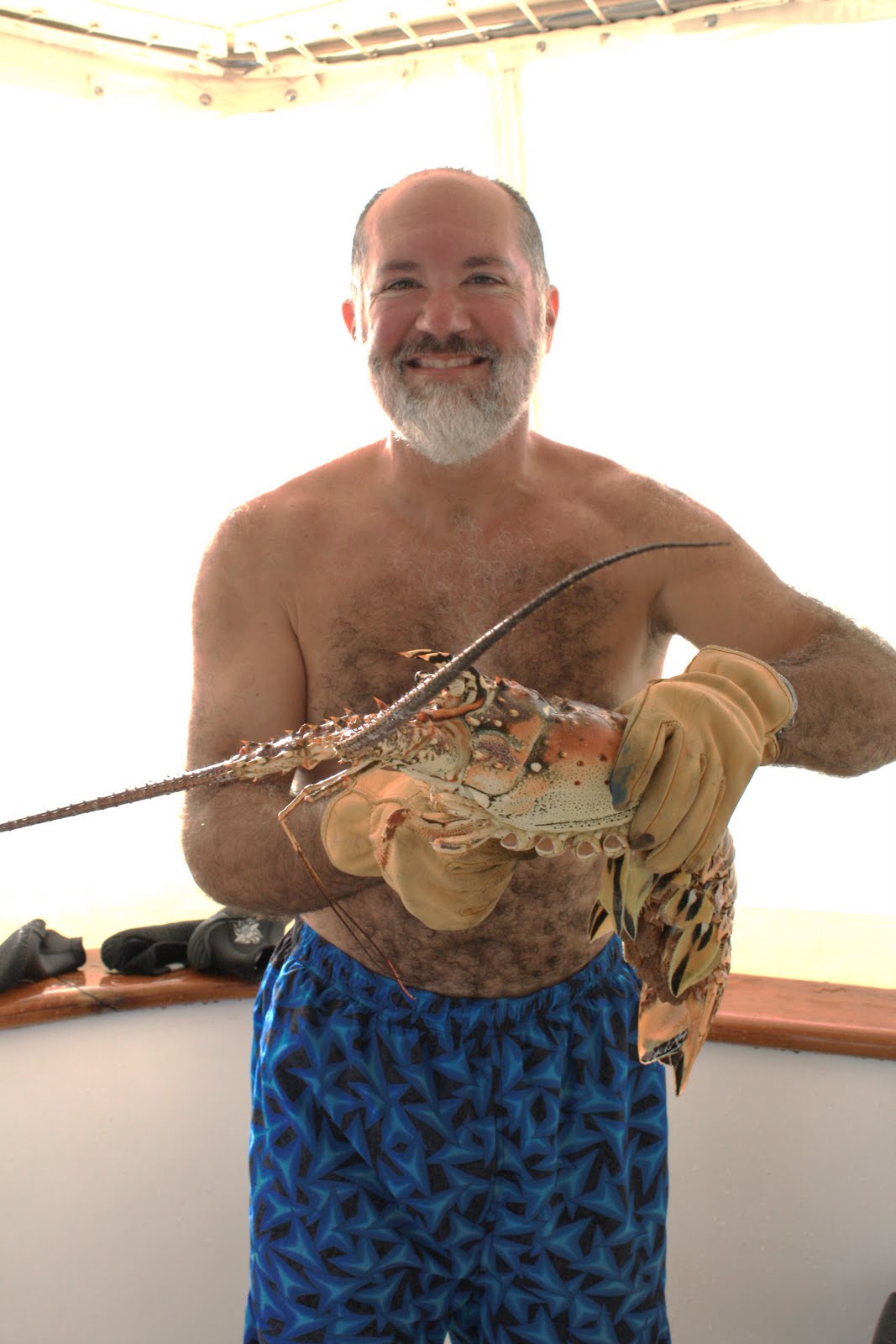
The island is ringed by a coral reef which is easily accessible from the shore along the Western and Southern sides. Furthermore, the entire coastline of the island has been declared a marine sanctuary, preserving local fish life. The coral reef around uninhabited Klein Bonaire is particularly well conserved, and we did most of our SCUBA dives in this area. Each afternoon the local kids would practise sailing all around our boats and they were fun to watch.

We dove with the crews of de Swerver and NightHawk while Emily snorkelled above with the ladies. I reviewed our SCUBA instruction book with Emily and even got her into the SCUBA gear for a taste of this sport. She had a little trouble equalizing (common with small young estuation tubes) but managed to float free at about 12 feet below the surface.

I retrieved an old 35mm film underwater camera from deep within our bilge and we have a few more shots to share with you.

Tom


Sunday, November 22, 2009

Fishing the outer Venezuelan Islands

We had a nice passage to LasTortugas and the Captain caught a Mahi-Mahi. These fish are also called Dolphin (not the Flipper variety) and are an iridescent blue and yellow. They loose their color almost immediately when brought into the boat and we all watched it change before our eyes. In the photo the color is receding from the mouth towards the tail and is about half gone. Kim used up the last of our Nori paper making sushi and we had enough meat for several dinners. Kim made soup with the bones and head and nothing went to waste. It was simply delicious.

Tortugas was clean with white powder sand beaches and few other people. We walked the beaches and did some snorkeling in the afternoons after homeschool and it was a peaceful stay.


We headed Northwest towards Los Roques and hooked a Little Tunny on the way.


It was good for a few dinners but never made it into a sushi roll. The Los Roques islands are a federal dependency of Venezuela, consisting of about 350 islands, cays or islets. The archipelago is an atoll and because of the wide variety of seabirds and rich aquatic life, the Venezuelan government declared Los Roques a National Park in 1972. We anchored off several of the individual islands and behind some barrier reefs. It was amazing to be anchored in calm light blue water and 50 yards ahead of us we could hear the crashing of waves against the reef that was protecting us. We snorkelled at each spot and saw turtles and many fish that were unafraid of us because they are protected within the park.

We headed westward toward The Aves. Las Aves is a pristine archipelago and is part of the Federal Dependencies of Venezuela. Just before making landfall, the Captain hooked a White Marlin. We brought it up to the side of the boat and managed a quick video before it made a quick flick of its sword and slashed the 80 lb leader like butter. We lost the lure but we enjoyed the fight and that magnificent fish will live to fight another day.


We dressed ship (put up special colored flags) for Emily's 9th Birthday. Kim baked a chocolate layer cake and we had Wiro and Esther from de Swerver over to celebrate with us. De Swerver hails from Belgium and they have been nice to travel with. Apparently we had enough gifts since Emily was in her glory.


She was invited alone to help sail de Swerver between islands on a 2 hour sail and got to steer and trim the sails.


The archipelago consists of two atoll-like reef complexes. We spent 2 days at Aves de Barlovento, the eastern group and moved west to Aves de Sotavento for 2 more days. The water here was also clear but strong winds made snorkelling a little too rough. There are large colonies of booby birds including the Red-Footed booby that have beautiful blue bills. Several fluffy babby boobies were watching us from their mangrove nests.


We had a pot luck dinner aboard Emily Grace one evening with the crew of de Swerver and Ray and Genna aboard NightHawk. NightHawk brought some blackfin tuna they had caught and we shared some Mahi Mahi and de Swerver shared some wonderful homemade dutch dishes. The wine flowed and my 3 A/C units ran to keep the boat cool and comfortable.


We were keeping track of the weather through our single sideband radio and were anxious to make our next landfall. Only 40 miles to the west lay Bonaire, where Kim and I had spent several winter vacations escaping the New England cold and enjoying the world class SCUBA diving. We could hardly wait to see it again….

Tom

Saturday, November 14, 2009

Moving Again

We finally have left Trinidad as the threat of hurricanes has now diminished. Although the insurance company wanted us to stay until November 1, we left a couple of weeks early. The entire crew was tired of the dirty water around Trindad and were anxious to swim in clean water again.

Our first stop was Los Testigos. The trip took longer than would be expected because we had to travel due north for almost 30 miles before turning west. We did this based on pirate reports on the north coast of Paria. There had been reports of trouble and this crew wants no part of any trouble.

Los Testigos is part of Venezuela and is mainly occupied by fishermen and their families. We saw several rugged fishing boats and a few cruisers and we enjoyed a few days walking the beach and snorkeling before moving on.

From there we headed southwest to Isla Margarita to top off the tanks with more cheap Venezuelan fuel. We did not care much for the island other than the cheap fuel. We took on about 400 gallons at 78 cents US per gallon and we were only 80 gallons from completely full. We wanted to get those last few drops aboard, but ran into the “no fuel today…maybe manana” Venezuelan two-step and decided to move on. The captain took a bus into the city to get Bolivar fuertes at the black market rate of 5 to 1 and the whole process made me feel dirty. The official government rate is about 2 to 1, but with inflation here at greater than 20%, every one except Chavez and the banks believe it.

The water was clean enough to swim in and make RO water, but was still slightly tannin from the Orinoco Delta outflow. They had a nice cruiser interface with a good book swap and free busses into the city 3 times per week. However, after 6 days here, we were ready to move on.

The boat has been running good. I’ve got one troubling issue where the laptop computer won’t consistently drive the autopilot. Since our other GPS chartplotter will, it has not been a serious problem, and the third backup plan is (heaven forbid) we could hand steer the boat. I suspect it may just be that the oldest (about 5 years old) laptop is just too slow now to keep up and I will switch it out when we get a chance.

We are now underway (another night passage) due west to Isla Tortuga. This should be our first clear clean blue water since Grenada and will be welcomed by the entire crew. It is nice to have the wind, currents and seas mostly on our stern. Tonight the seas are less than 1 meter and the stabilizers are switched off since they are not needed. The moon is nearly full, the stars fill the night sky and all is well as our home glides west. In 5 hours, Emily will awaken with the sunrise as we slip into the anchorage and drop the hook. Another island to explore and enjoy.

Tom

Wednesday, October 28, 2009

Socializing and our Domino Champion

We have met several cruisers along the way with whom we have shared joys, dinners, and beach trips and helped each other with boat problems or needed parts. Here is a shot of us celebrating a birthday of circumnavigator Gerald aboard Whiskers with several other friends.


Along with beach trips and sharing rental cars we have found that Mexican Train Dominos is a quite popular game with boaters of many countries and another avenue to socialize. We had a nice set hidden away with the many games we had brought from the states but had never bothered to learn how to play. We finally all went in one Sunday and we sat down with about 30 others and learned this simple and fun game. We now play on the boat after dinners many nights and Emily has gotten quite good at it.


We have run into quite a few areas through the Caribbean that are so organized that there are morning nets on the VHF radio every morning. These 30 to 40 minute discussions review safety and security issues, trade “treasures of the bilge” among cruisers in the harbor, summarize the weather for those without single side band radios or WiFi internet and discuss social events.


She became a regular at the Sunday Domino cruiser tables and she even beat all 30 of the adults and became Champion for the week in Chaguaramas, Trinidad. Below is the announcement on the morning net.


We are trying to instill some humility in this child and explain that doing a victory dance in front of 30 adult losers may not be the most mature thing to do. However, Dad won the next week so the crew of Emily Grace is now feared by Domino players throughout the Caribbean!


Tom


Thursday, October 1, 2009

Risks and Rewards – The Orinoco Delta Lodge

Sometimes the greatest rewards come with greater risks. The recent trip to Venezuela was in many ways similar to this whole boat trip with regard to risk. We could have stayed safely home in our four-bedroom colonial in Connecticut and been quite comfortable. But we would have missed Emily playing with Dolphins in Lucaya, swimming through Thunderball Cave in Staniel Cay and watching fireworks on the bow of our boat in the Virgin Islands with my Mother.


We left Trinidad with a handful of waypoints towards a muddy river that is essentially uncharted on both my electronic and paper charts. The charts for this area were created by Christopher Columbus. We braved all this and passed several areas of 6 foot deep water (at 5 feet, we are aground!) as we moved 65 miles up this river. What we found was a magical spot called the Orinoco Delta Lodge. This lodge mostly caters to wilderness type travelers who come in for 2 or 3 nights to see the howler moneys and fish for piranha. The staff doesn’t see too many cruising boats and even fewer trawlers.


The owner, Anthony, and his wife run this place and two other lodges in Venezuela and could not have been more welcoming. We initially anchored around the corner from the lodge, but were quickly asked to anchor right off the main lodge for our convenience. Within a few minutes of re-anchoring, they called to me across the water asking if I could give an intra-muscular injection. I told them no, but that my Admiral could if need be. They sent a Panga over and Kim was soon giving an injection to one of the workers that had been stung by a scorpion. Apparently, he was being a hero and did not tell anyone about the sting at first. By the time Kim got to him, he was vomiting as the venom was working through his system. After the injection (we suspect was benadryl or a pain killer), he was on a Panga at high speed headed 25 miles to the nearest town and some antivenin.


We ate several wonderful dinners in their restaurant and spent several warm afternoons sitting in comfortable chairs in the shade of the thatched roof lodge. We strolled the grounds and saw woodpeckers, butterflies and even a parade of leaf-cutter ants. They had WiFi internet which was useful for checking e-mails, but not even the Captain wanted to waste much time here thinking about the outside world.

We were befriended by James who tended the bar and had done most of the landscaping around the lodge. There were flowering bushes, banana, mango and guava trees and tons of orchids throughout the grounds. James searched in a plant near the dining room and soon had a tarantula crawling up his arm. He explained that they don’t usually bite things bigger than they are unless they are spooked. Soon it was crawling on Emily much to her delight. Having spent some of his working years in the US, he had full command of English, Spanish and Warao.

They had a caged Puma and a wild parrot named Rumba. Rumba was raised there from a chick and was free to fly off into the jungle and would come and go at will. Rumba quickly bonded with Emily and would sit on her shoulder for hours while we walked around the lodge or sat and talked. Once on her shoulder, Rumba would protect Emily. Even the lodge owners could not approach Emily for fear of being nipped. Since these birds can crush nuts like butter, this is not a threat to be taken lightly. When we would come in to the Lodge from the boat, Emily would only get two steps off the dingy and Rumba would swoop down from the rafters or from a palm tree and land directly on her shoulder. It was WAY COOL.


James taught us how to fish for piranha with cane poles, and how to clean and fix them for dinner. We ate several and we were thankful that the piranhas were not eating us! We took the dingy on several long excursions up the narrow canos and saw howler monkeys, flying parrots and toucans and beautiful blue butterflies as big as my hand and we did some more piranha fishing.


I approached Anthony about getting some of that cheap Venezuelan diesel fuel and he explained that they travel about 25 miles further up river to get it in Boca De Uracoa. We changed some US greenbacks for Bolivar Fuertes and headed further up the river with no dependable charts and no waypoints…more risk. We managed to find the station and we docked our 50 foot boat in 12 feet of water to a rickety 8 foot wide dock. Since no English was spoken at this place, it took some Spanish babbling to explain that we were looking for about 1600 liters of diesel fuel. At first it was not possible, but further discussions produced a long leaky hose that could reach 3 of my 4 fuel tanks. We managed to pump almost 600 gallons of fuel through my filter funnel into the boat and into my only spare diesel jerry can. I exchanged my Bolivar Fuertes and asked for a receipt like this was an everyday thing for me…no big deal.


Once free from the rickety dock and safely backed up the narrow side river we were on, I took out my calculator. A silly smile came to my lips as I realized that I had just filled my boat with diesel at just under 4 cents US per gallon. All that fuel had cost me under $20.00 US! Thank you Chavez!


All along the rivers were Warao homes and villages and waves and smiles were freely passed. These people were as interested in us as we were with them and were very respectful. Some had baskets or hammocks to trade but most wanted just to say Hola and see the big blue boat and the friendly little white girl. Sometimes while anchored, groups of young girls would paddle near but not come within about 30 feet unless we waved them closer. Most could understand the captain’s rusty Spanish and many giggles and smiles were exchanged. It was refreshing to see these peaceful, simple people living much the way they have for hundreds of years.


We stayed near the lodge for almost a week. We gave tours of our floating home to some of the staff and several were ready to sign on as crew. On our final day, James walked us around the grounds and through his herb garden picking stalks of bananas, fresh sweet and hot peppers, cilantro, callalou and fresh oregano for us to take with us. Emily bit into a fresh guava with Rumba riding on her shoulder and tears were shed by all when we had to say farewell.


This experience reinforced that the greater risk would have been not to come. To have stayed home, to have stayed in Trinidad, would have been tragic mistakes. The memories of these people and this place will warm us long after we have moved on.


Tom